

On March 20, two research papers led by Fudan University were published in Science, shedding new light on key mechanisms in brain science.
Blocking the transition from pain to depression
A team led by XIAO Xiao, Trevor Robbins and FENG Jianfeng from the Center for Cognitive Neuroscience, Institute of Science and Technology for Brain-Inspired Intelligence (ISTBI), Fudan University, discovered that the dentate gyrus, a subregion of the hippocampus, serves as the key region for regulating the transition of chronic pain into emotional disorders, and can be modulated to influence chronic pain and reduce the risk of its transition to depression.
This provides new insights for clinical application: in the early stages of pain, the volume of the dentate gyrus can be evaluated via brain imaging to predict the risk of anxiety and depression, enabling early intervention.
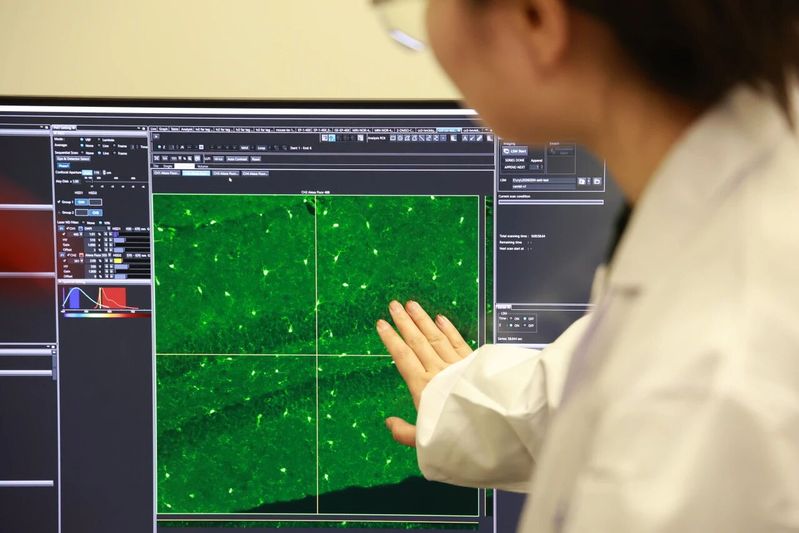
In addition, the team has identified a drug with a potent inhibitory effect on microglia, an immune cell of the central nervous system. This may significantly reduce the likelihood of emotional disorders in patients with chronic pain, and thus help improve their quality of life.
A highlight of the research methodology lies in the team’s adoption of brain imaging scans involving nearly 30,000 participants, which enabled the observation of alterations in corresponding brain regions.
In the future, the team will continue to focus on how the hippocampus receives sensory information, transmits emotional information, and regulates higher‑order cognitive functions, further investigate how the hippocampus integrates sensory, emotional and cognitive information.

Decoding the brain-skin communication axis
Another team led by LIU Shenbin from the State Key Laboratory of Brain Function and Brain Diseases, Institutes of Brain Science(IOBS), Fudan University, successfully decoded the brain-skin communication axis.

Researchers of Liu’s team found that when the brain perceives psychological stress, it will send signals to the skin through a specific sympathetic nerve pathway, activating a type of immune cell called eosinophils and thereby exacerbating skin inflammation.

This study addresses the key issue of how stress signals in the brain precisely regulate skin immunity. It also emphasizes the significance of psychological state as an important clinical variable, providing a scientific basis for integrating psychological interventions into the comprehensive management of skin diseases.
(END)
Writer: ZHANG Ruiyi
Proofreader: YANG Xinrui
Editor: WANG Mengqi, LI Yijie