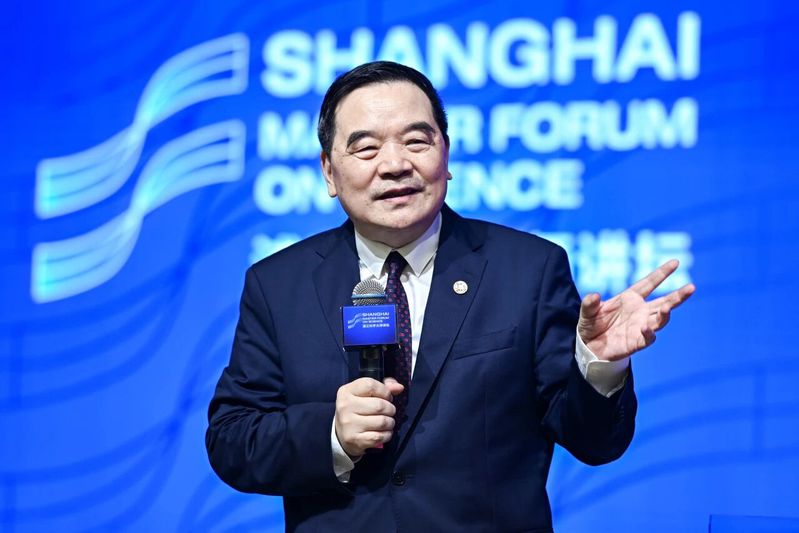

When Prof. DOU Dejing in the College of Computer Science and Artificial Intelligence at Fudan University, formerly a full professor in the Department of Computer Science at the University of Oregon, saw Fudan’s call for English-taught courses in early 2025, he was struck by the idea: why not establish a structured specialized certificate program in AI?
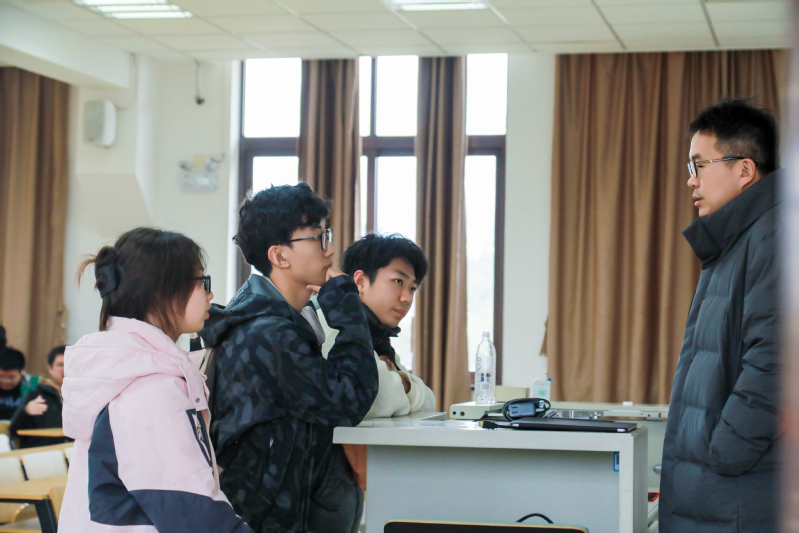
He soon partnered with his colleague Prof. SHANG Li, who had previously taught as an associate professor at the University of Colorado. Both of them had secured tenured positions in the United States and had solid experience in AI education taught in English. Together with 5 junior faculty members with overseas research backgrounds, Prof. Dou and Prof. Shang spent over 6 months developing a full English-taught AI certificate program. The program is also open to non-computer science majors, including international students.
Originally designed with 6 courses, the program has expanded to 9, covering the field of AI from fundamentals to advanced technologies. Courses include Introduction to Artificial Intelligence, Machine Learning Theory, Data Mining, Introduction to Embodied Intelligence, Human-Computer Interaction, Machine Learning Systems, Computer Vision, Natural Language Processing, etc.
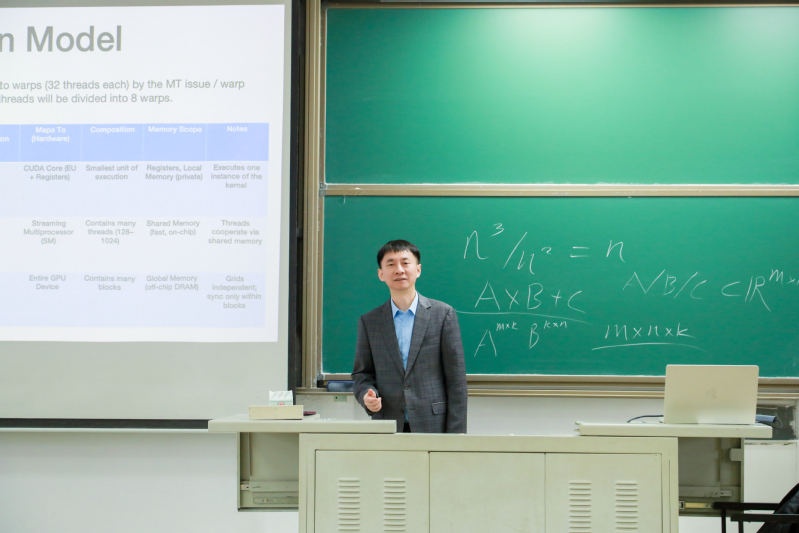
The textbook for Introduction to Artificial Intelligence, a course mainly taught by Dou, is Artificial Intelligence: A Modern Approach, one of the most widely used AI textbooks worldwide. The teaching style, assignment, and project design of the course are all paralleled with the one he taught in the U.S.
Another course, Machine Learning Systems, taught by Shang, updates more than 30% of its content each semester to keep pace with rapid advances in the field. From CUDA programming to model training, the course provides an end-to-end perspective of AI systems.
“It’s not an easy course to teach,” Shang admitted, “but students gain a comprehensive understanding of the entire machine learning systems, or we can say the ‘big picture’, which is essential today.” He hopes students can integrate software, hardware, and algorithms and develop a mindset of innovative and dynamic integration.
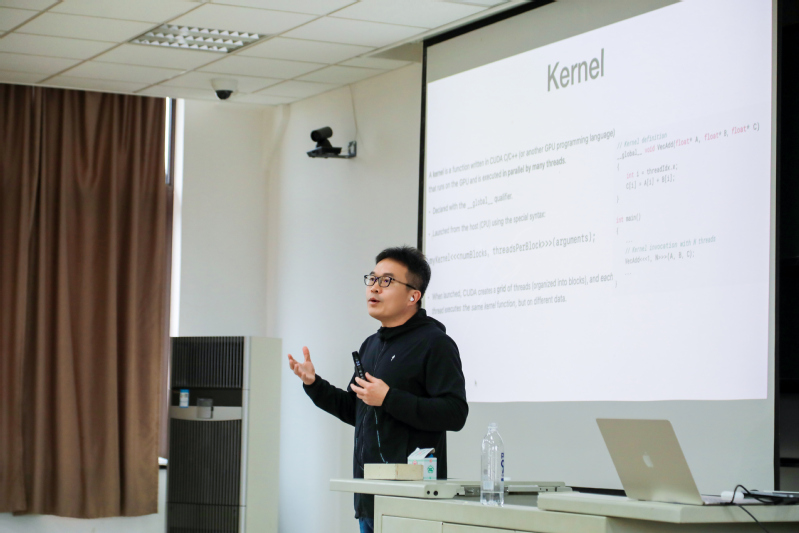
Designing the program entirely in English is meant to align students with global research. “Many technical terms have multiple Chinese translations. Learning in Chinese may pose difficulties in reading papers and following lectures,” Dou explained. In his classes, all activities, from presentations and assignments to questions and professor’s responses, are all conducted in English. “China and the U.S are engaging AI development actively. English instruction can better equip students for future research and careers,” Shang added.
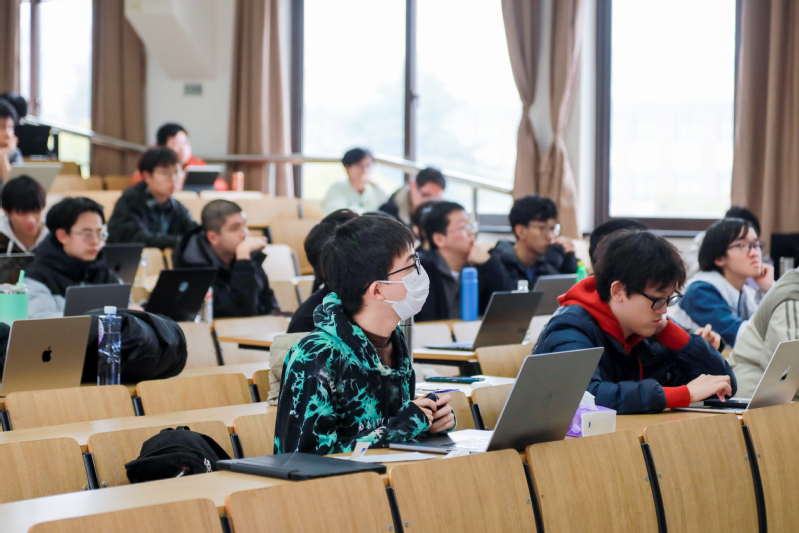
Shang also acknowledged the challenges for students with weaker English proficiency, but emphasized its value of building capabilities.
English instruction also promotes internationalization. By bringing together students from diverse cultural backgrounds, the program encourages conversation and new ideas. “Students may encounter different ways of thinking, and international students can gain a better understanding of China,” Shang said.
Students have also responded positively to the program. ZHU Yansong, a student from the College of Computer Science and Artificial Intelligence, complimented Machine Learning Systems as “the best course I have ever taken in Fudan.” Beyond technical knowledge, the class also explores broader issues. For example, Shang once showed two speeches illustrating the growth trajectory of an engineer at NVIDIA. “The professor focuses more on helping students understand the essence of AI,” Yansong told us, “He guides us to think about the branches and directions worth pursuing.”
For WU Zhiyue, a freshman from the College of Smart Materials and Future Energy, Introduction to Artificial Intelligence proved more challenging than expected. “The course balanced general introduction and detailed explanations,” he noted. Despite the difficulty, WU believes the course is worthwhile, as cultivating English thinking is especially beneficial to science and engineering students. “It makes me more confident in the AI era.”
Dou also revealed that on the basis of the certificate program, the College of Computer Science and Artificial Intelligence is considering launching an English-taught undergraduate degree program in Artificial Intelligence in 2027. The degree is planned to involve more than 20 English-taught courses and primarily target international students, while also welcoming Chinese applicants. Dou will be in charge of the program.
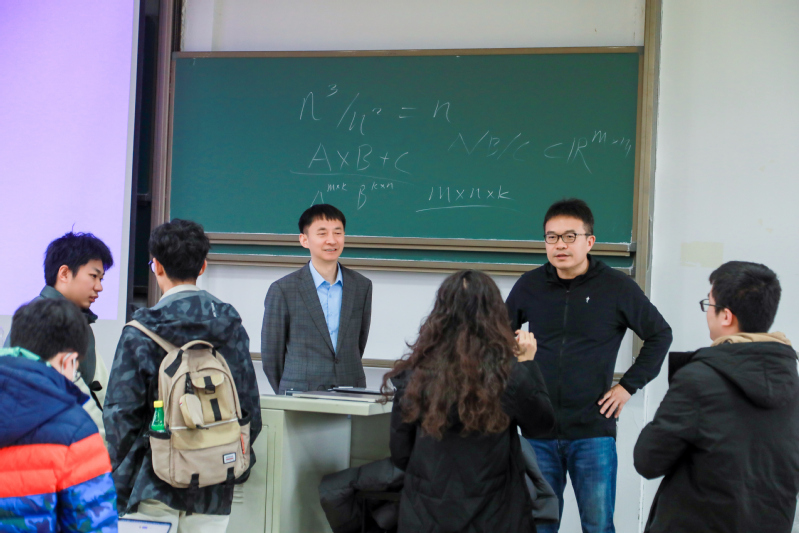
“The most important thing is to keep forging ahead,” Shang said, “We refine the courses again and again. Like software evolving through generations, the program will be improving step by step.”
(END)
Writer: ZHAN Yuxin
Prooftreader: YANG Xinrui
Editor: WANG Mengqi, LI Yijie