

In materials science, a fundamental challenge has long persisted: how to construct complex, ordered structures from simple interactions? Traditional approaches often rely on highly sophisticated building blocks or precise external control. While effective in theory, these methods are difficult to implement in practice and frequently lead to defects during assembly.
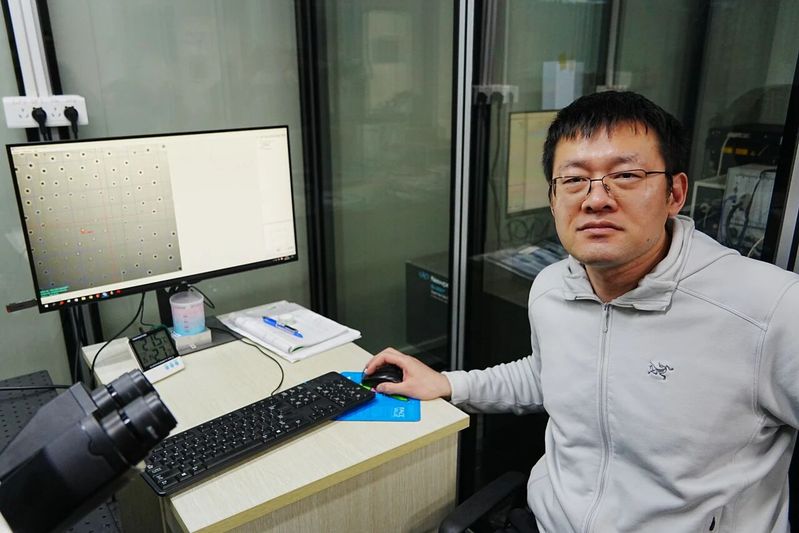
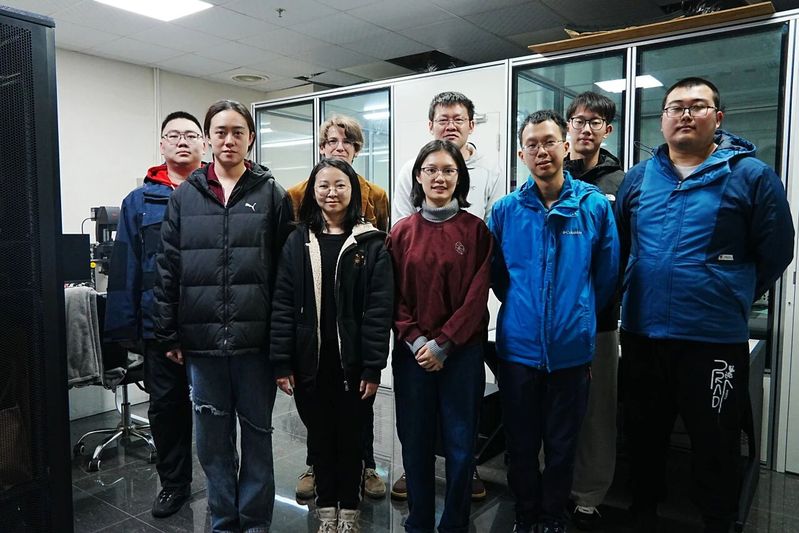
On April 1, Professor TAN Peng from the Department of Physics and the State Key Laboratory of Applied Surface Physics at Fudan University, together with his collaborators, published a study titled “Dual-symmetry-guided assembly of complex lattice” in Nature, introducing a new design paradigm known as Dual-symmetry-guided (DSG) assembly.
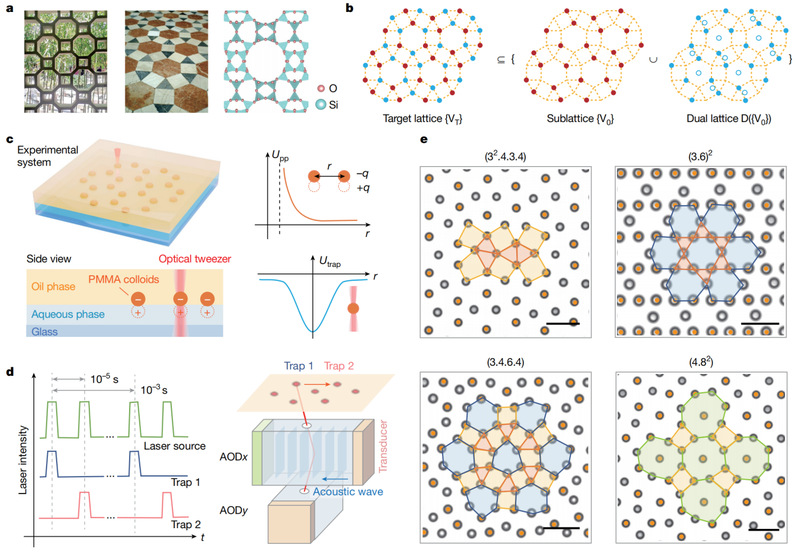
At its core, this approach shows that complex structures can emerge from simple rules. Rather than controlling every part of a system, the method only requires guiding a portion of it, and the rest then forms naturally through self-organization. “We don’t need to control all the information. By precisely guiding part of the system, the rest can be completed through its intrinsic dynamics,” said co-first author SUN Wensi, a PhD student of Prof. Tan.
The idea builds on a symmetry principle observed in many complex lattices. “Through repeated experiments, we gradually found that many complex lattices possess an inherent duality,” said Tan. By leveraging this property, the team was able to simplify the design process and move from trial-and-error toward a more predictive and efficient strategy.
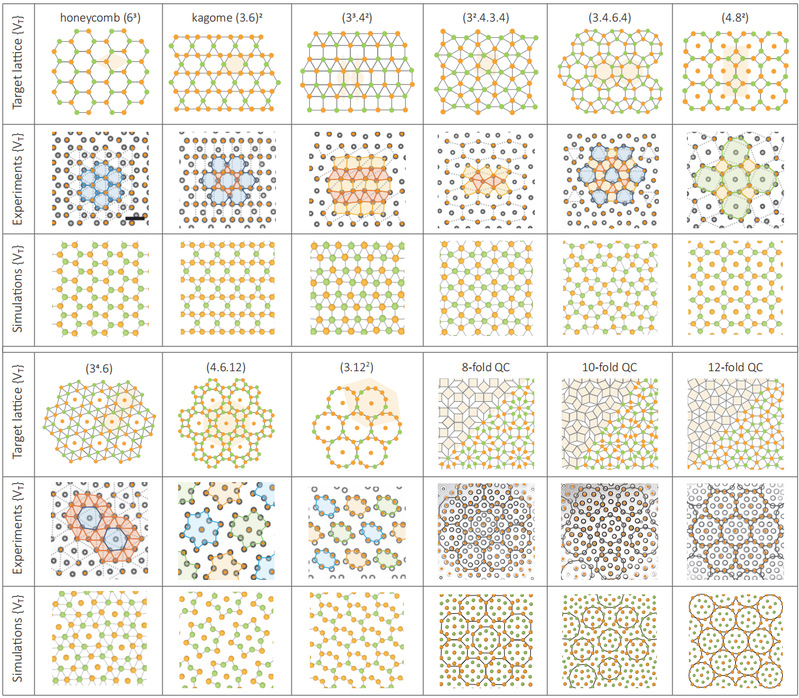
Using this framework, the researchers successfully assembled multiple complex lattice structures and extended the method to quasicrystals with higher-order symmetries. Both experiments and simulations confirmed the robustness and general applicability of the approach.
More importantly, this work demonstrates a fundamental shift in materials design: complexity no longer depends on complex components. By lowering design difficulty while improving structural quality, the DSG paradigm provides a scalable strategy for constructing advanced materials.
“Our work provides a new design strategy for the fabrication of complex lattice materials,” Sun said. The approach is expected to find applications in areas such as photonic materials, superconducting systems, and colloidal assemblies.
Looking ahead, the team is exploring the integration of artificial intelligence to further optimize material design, aiming to extend the framework to three-dimensional systems and a broader range of complex structures.
The original paper:
https://www.nature.com/articles/s41586-026-10364-3
(END)
Writer: Cheng She Vern
Prooftreader: YANG Xinrui
Editor: WANG Mengqi, LI Yijie