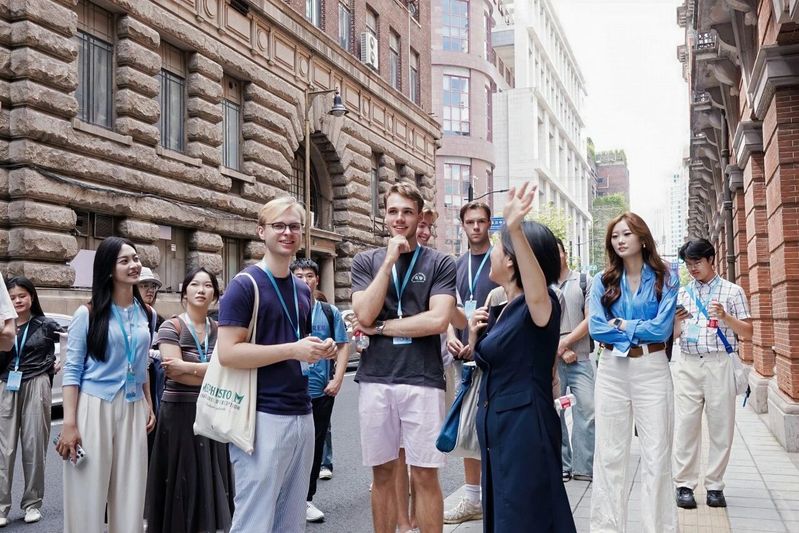
On a street somewhere in Shanghai, a pack of young people walks and talks. Chinese, English, and Chinese with an accent or two mixed in. Someone stops to photograph the corner of an old building. Someone else pauses to read a plaque on the wall. Someone gets pulled back by a friend: “Look at this house number. It’s a hundred years old.”
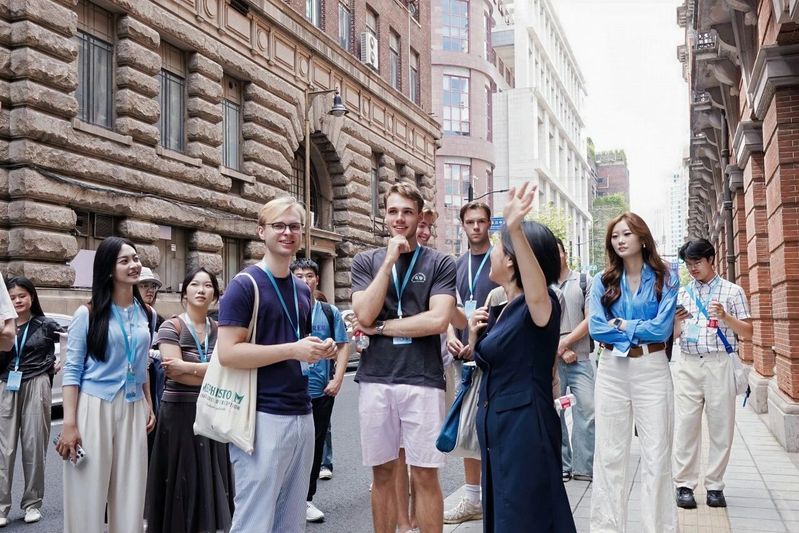
That is a snapshot of Shanghai Discovery: Explore the City, Connect with the World, a co-visit program for new Chinese and international students at Fudan University.
From Songjiang, where the city’s civilization began, to Huangpu’s packed streets and markets. From Xuhui’s haipai heritage to Pudong’s frontier of opening-up. From Qingpu’s water towns to Fengxian’s rising industrial city. And on to Yangpu, where the old industrial belt is reinventing itself.
Jointly organized by the university’s Department of Publicity, International Students Office and Department of Student Affairs, the program was launched in September. More than 150 new students from roughly 40 countries have spent their weekends following the threads of the city’s growth — and watching Shanghai remake itself.
The first thing they talked about was speed
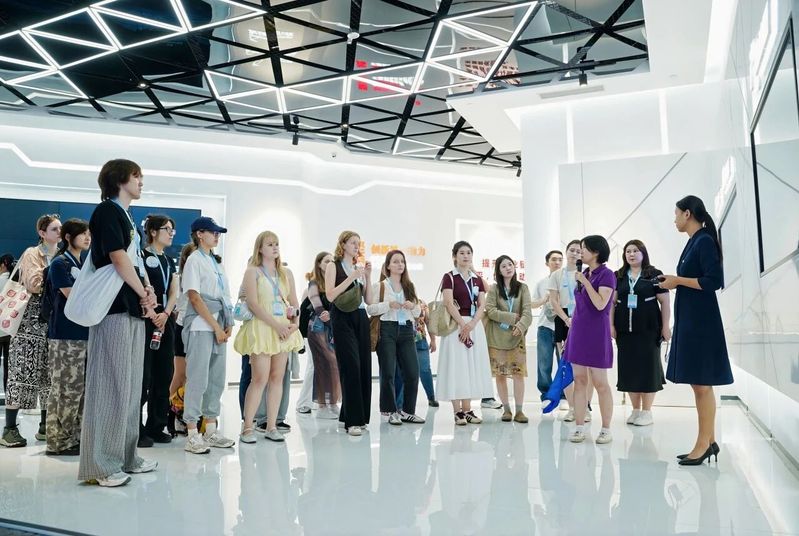
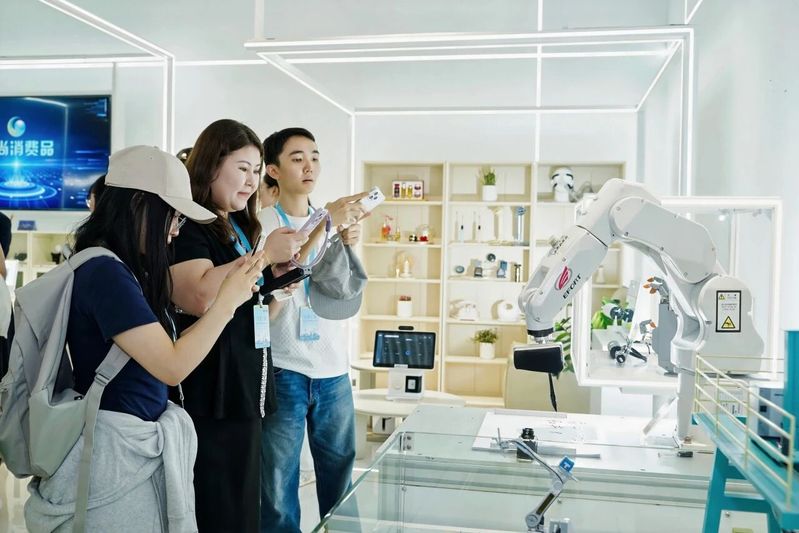
At the G60 Science and Technology Innovation Corridor in Songjiang, biomedicine, aerospace and smart equipment stand in a row. The group moved slowly. One student crouched down to watch a machine work.
Mihaela Parvanova, a first-year student at the School of International Relations and Public Affairs, is from Bulgaria. “The most impressive thing was the robot that could write and do calligraphy.”
To her, Shanghai — and China more broadly — now sits close to the center of the world stage. “People here are already racing towards what’s coming next.”
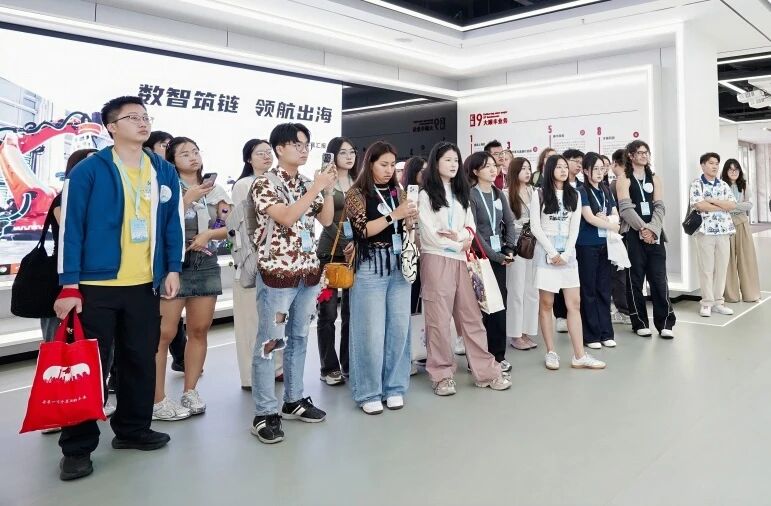
At SF Express headquarters in Qingpu, the journey of a parcel was taken apart stage by stage: transport, sorting, last-mile delivery, data running through every leg of it. Green logistics and ESG ratings have stopped being vocabulary and turned into lines on a chart.
LIU Sihan, from the Department of Environmental Science and Engineering, studied those ESG figures for a long while. “I knew some companies were doing carbon footprint accounting. But seeing the actual numbers by myself is something else.”
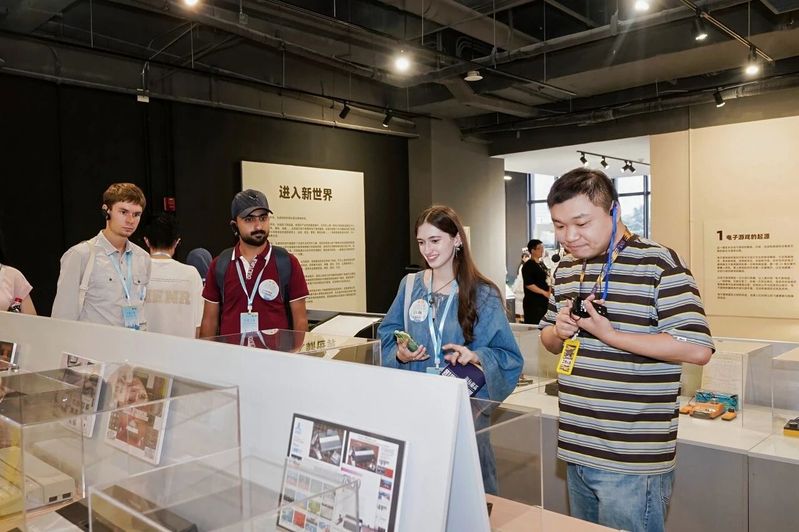
At the Video Game Museum of CADPA in Xuhui, Victoria Barbieri of the United States stood in front of an old machine for a long time.
“I’m a computer science major. It was really cool to see the origins of this technology. I saw how we built up from something so small only fifty years ago. ”
Walking the city, plenty of students came to the same conclusion as she did: innovation is no longer a word on a display board, but a mechanical arm that can write, or a corridor that began in a lab and grew, all the way, into an industry.
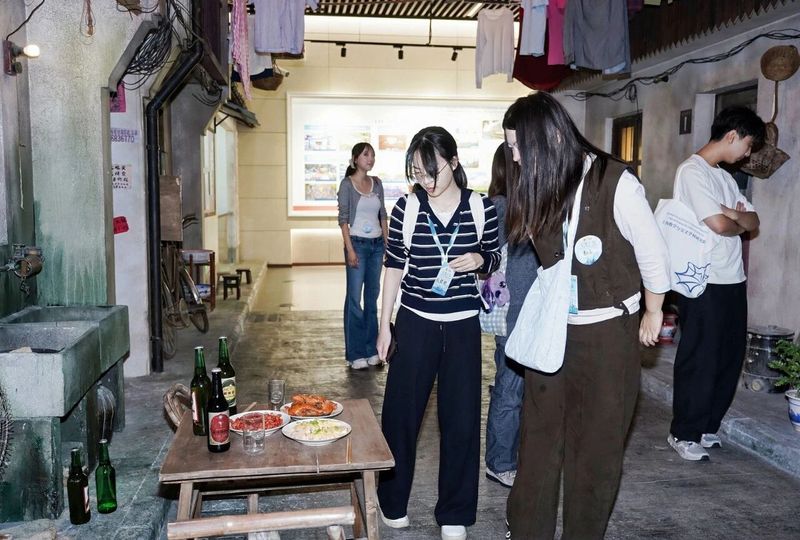
Inside the Shanghai Pudong Exhibition Hall, old footage of “Muddy Road” pulled the group back decades. From tidal flats and farmland to a hub of science and technology, the years on the screen argued more persuasively than any narration.
“An exhibition like this has a lot of incredible things to see,” said Bothier Emilie Lisa, an exchange student from France. The visit, she said, had helped her understand how Pudong has grown into what it is — a microcosm of China’s reform and opening-up.
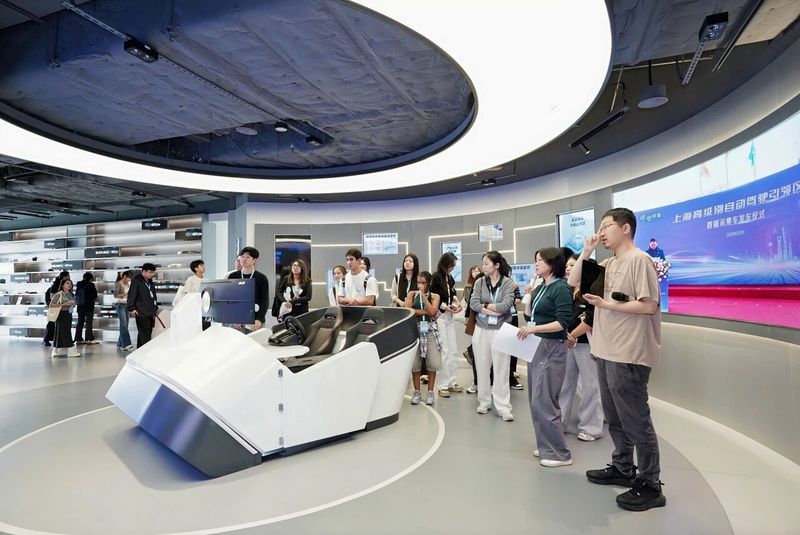
At Jinqiao Group, the group gathered around a driverless car model to hear how the simulated driving system works. “Pudong Speed” — once a slogan — became a car that steers itself around a corner.
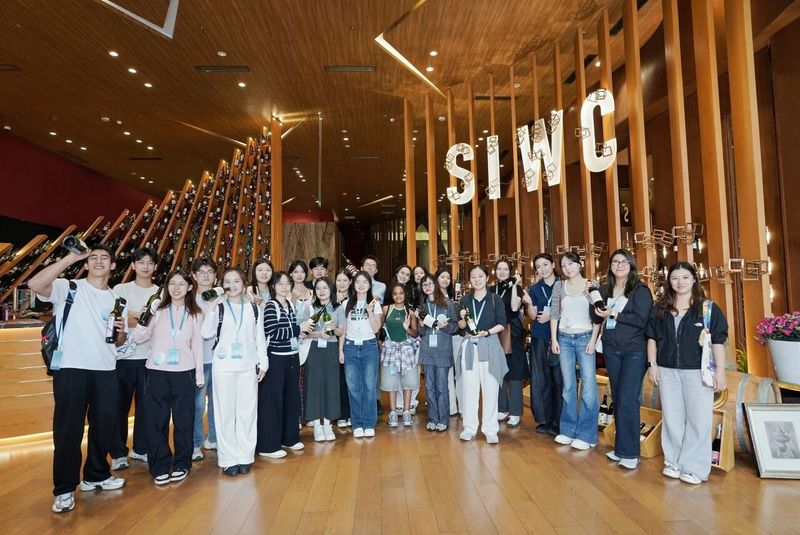
At the Waigaoqiao Global Hub, thousands of labels from more than thirty countries line an entire wall. “Buy from the world, sell to the world” became something you can see.
They found that old and new coexist well
In Songjiang, the G60 corridor looks ahead. Guangfulin looks back.
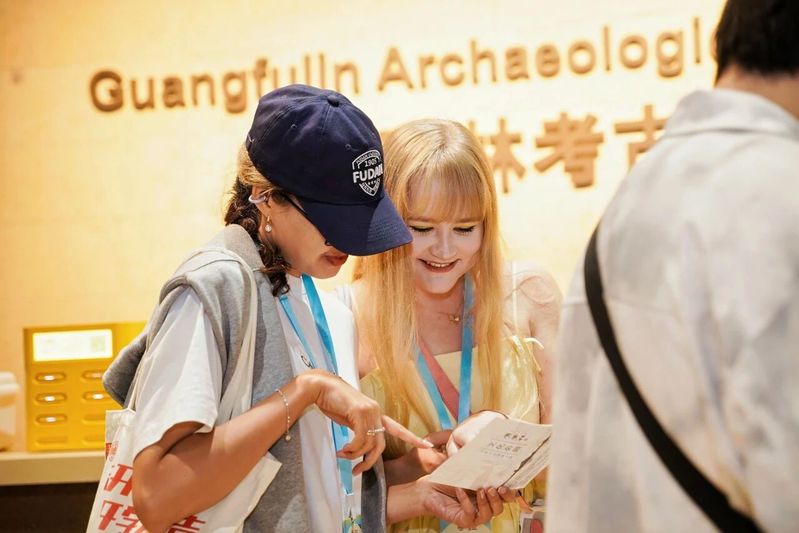
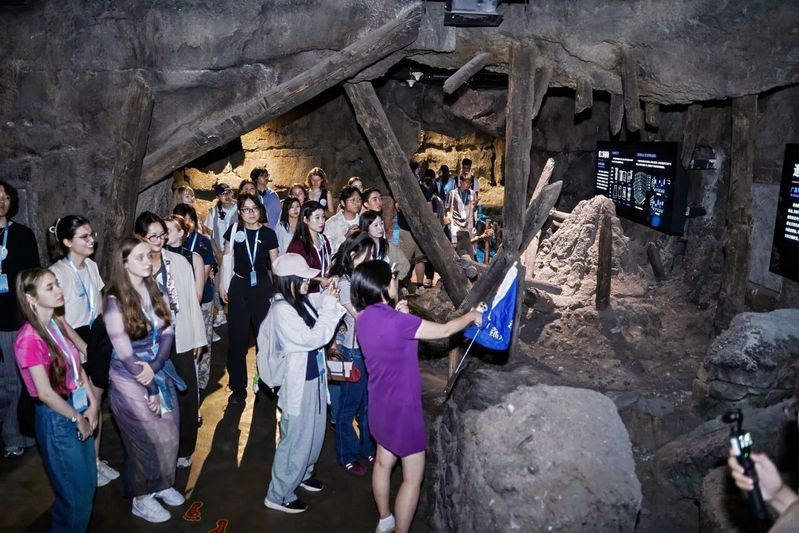
In the exhibition hall of Guangfulin, archaeological strata stack up layer by layer — one layer of earth, one era: Songze, Liangzhu, Guangfulin. Standing there, the students could almost see where Shanghai came from.
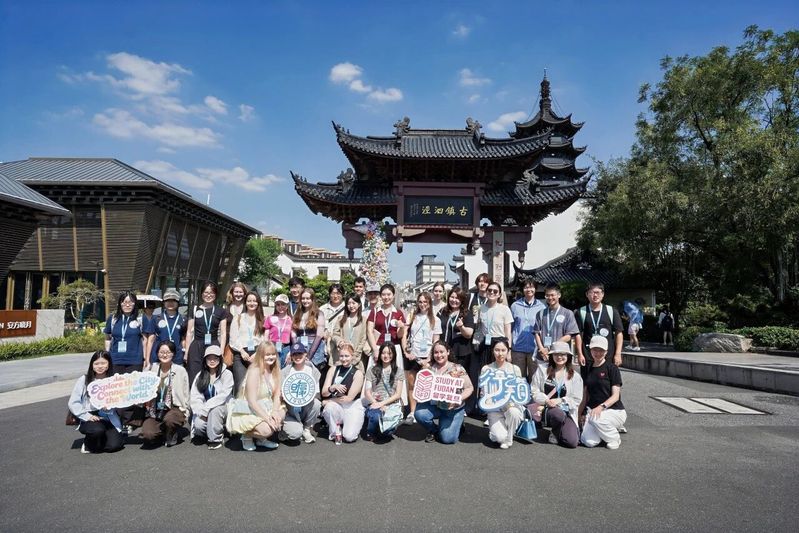
On the stone-paved lanes of Sijing Ancient Town, the group walked into the former residence of MA Xiangbo, former president of Fudan University. The guide told them how he set out to save the country through education, and founded Fudan Public School — the first institution of higher learning established independently by Chinese — the predecessor of today’s Fudan University.
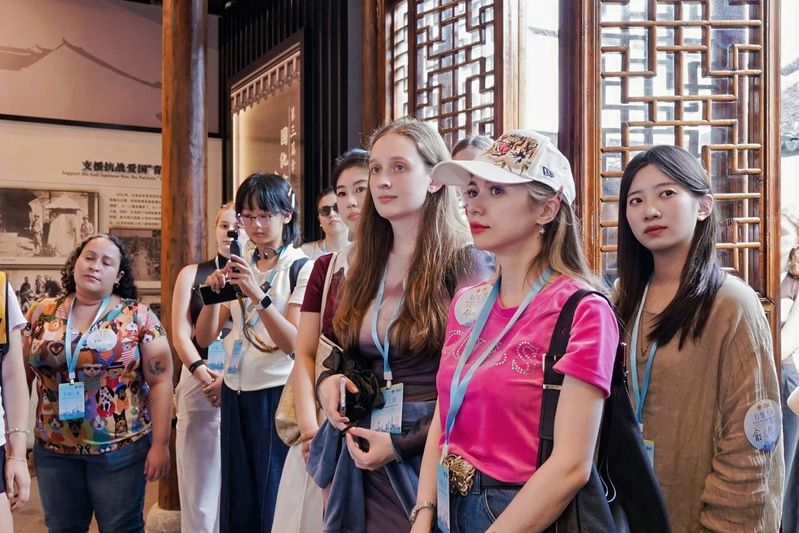
Fernanda Barbosa de Souza comes from Brazil and studies at the Institute for Global Public Policy. Shanghai is new to her, and what she knew was the modernization of the city.
“I can see how China has kept the modern and the traditional alive together.” She had not known Fudan’s story before, “It brought me a lot of knowledge and helped me understand how Fudan came to be what it is today.”
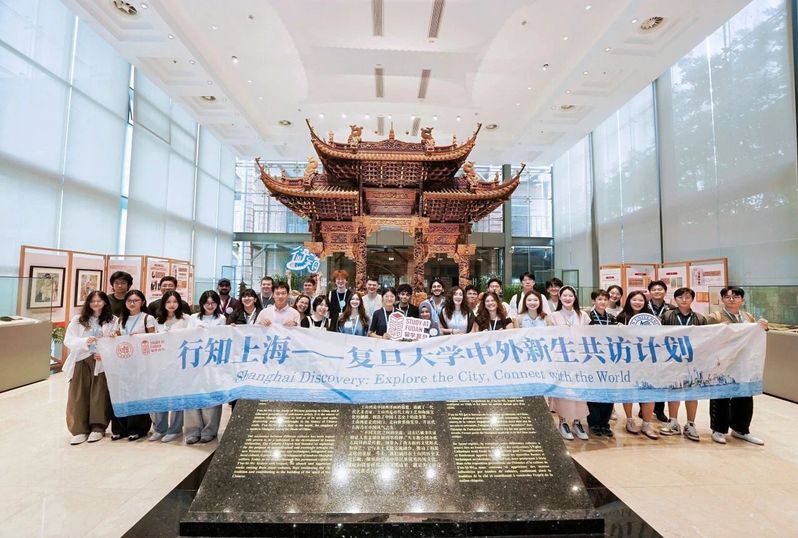
In Xuhui, the great teakwood archway of the T'OU-SÈ-WÈ Museum stands its ground. More than a century ago, Chinese and Western craftwork met on the same piece of wood. Behind glass, carved cabinets of stained glass and boxwood carvings are lit inch by inch.
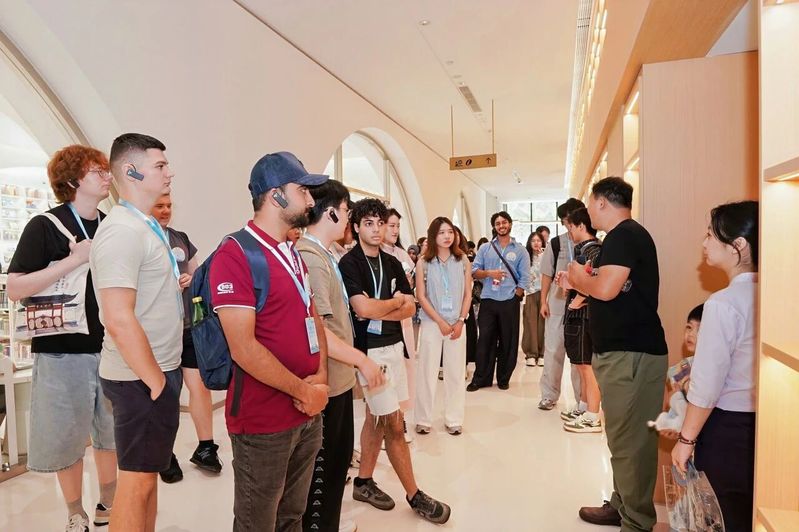
The blend of classical and contemporary at Zikawei Library kept students lingering. On the second floor, a single pane of glass frames modern bookshelves and a century-old building in the same shot.
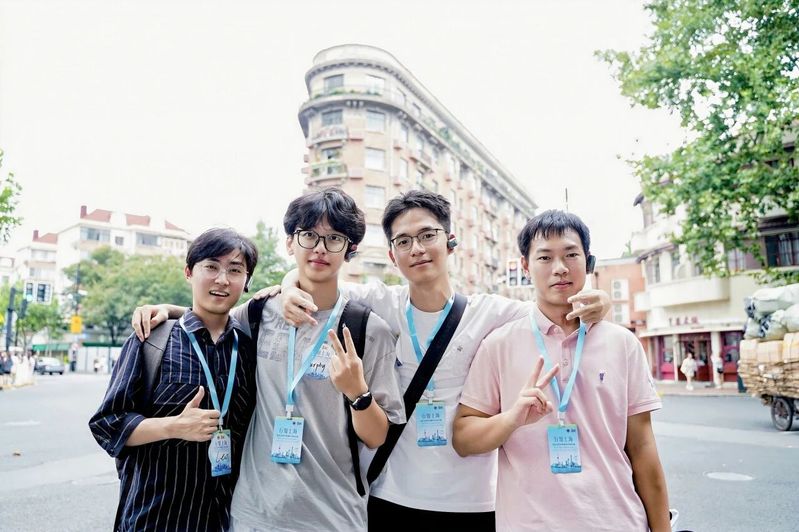
Under Wukang Mansion, the shadow of plane trees fell across the pavement. Some students counted the floors with their heads tipped back; others shifted position to find the right angle.
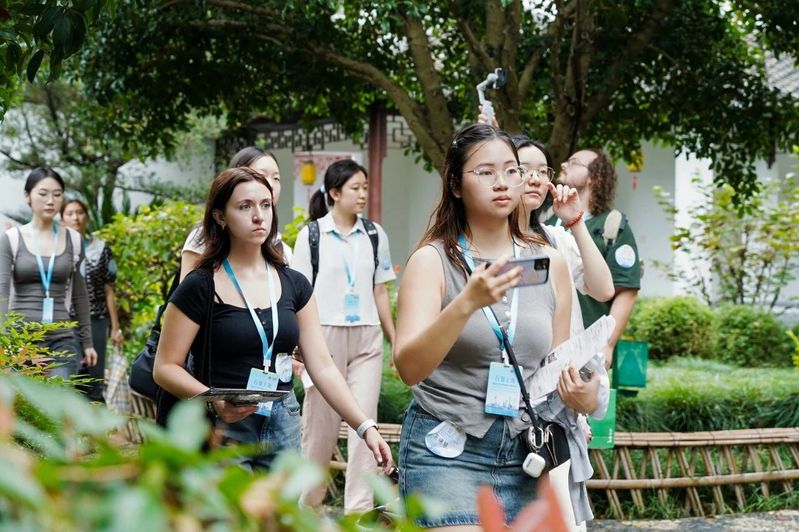
In Zhujiajiao Ancient Town in Qingpu, bamboo shades the lanes and water runs quietly. The students moved between whitewashed walls, dark tiles and old bridges, taking in a water-town mood that the modern metropolis has all but forgotten.
“It’s so beautiful. Next time I want to come back in hanfu and take photos,” said Salma Mohamed Aboelkassem Farghal of Egypt, a first-year student at the School of Journalism, on her first visit to Zhujiajiao. Chatting with people from other countries and outside her own major suited her outgoing nature just fine.
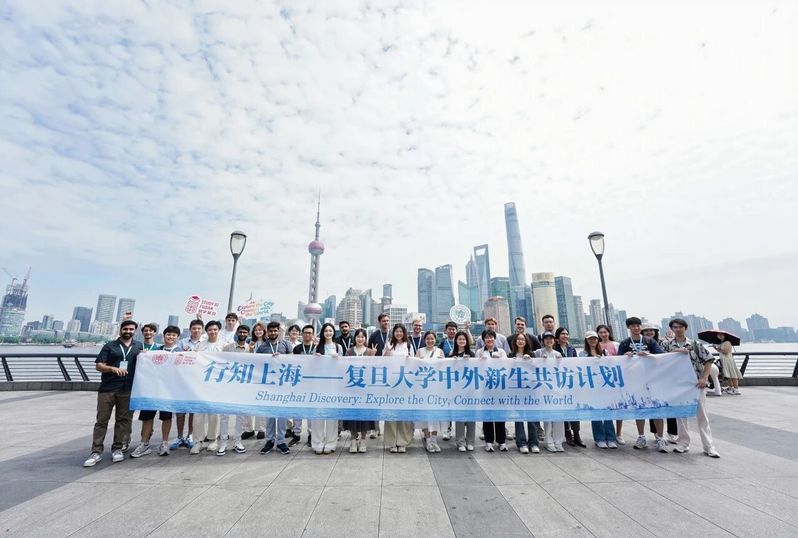
Along the Huangpu River, the Bund’s parade of international architecture stands shoulder to shoulder. In the shikumen lanes of Xintiandi, coffee drifted out from between brick walls that still carry the marks of history.
To the students, one of the most moving things about a city might be exactly this: its old and its new can share the same street.
The longer they walked, the more they talked
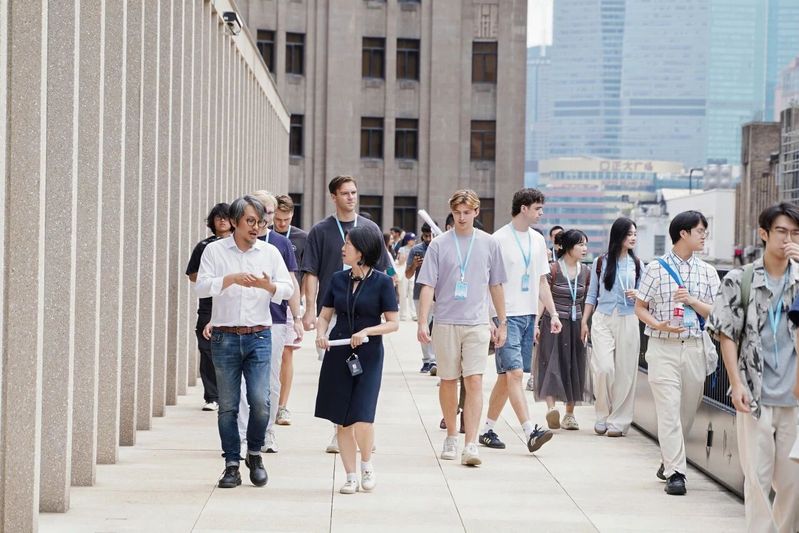
Along the way, whenever the guide spoke, someone quietly translated alongside. Where a cultural gap brought things to a halt, hands filled in the meaning. Bit by bit, Chinese and international students and teachers filled in what they didn’t know about each other.
And by the end of a day on foot, they had grown familiar. Shared hobbies, hometown snacks — subjects nobody tired of.
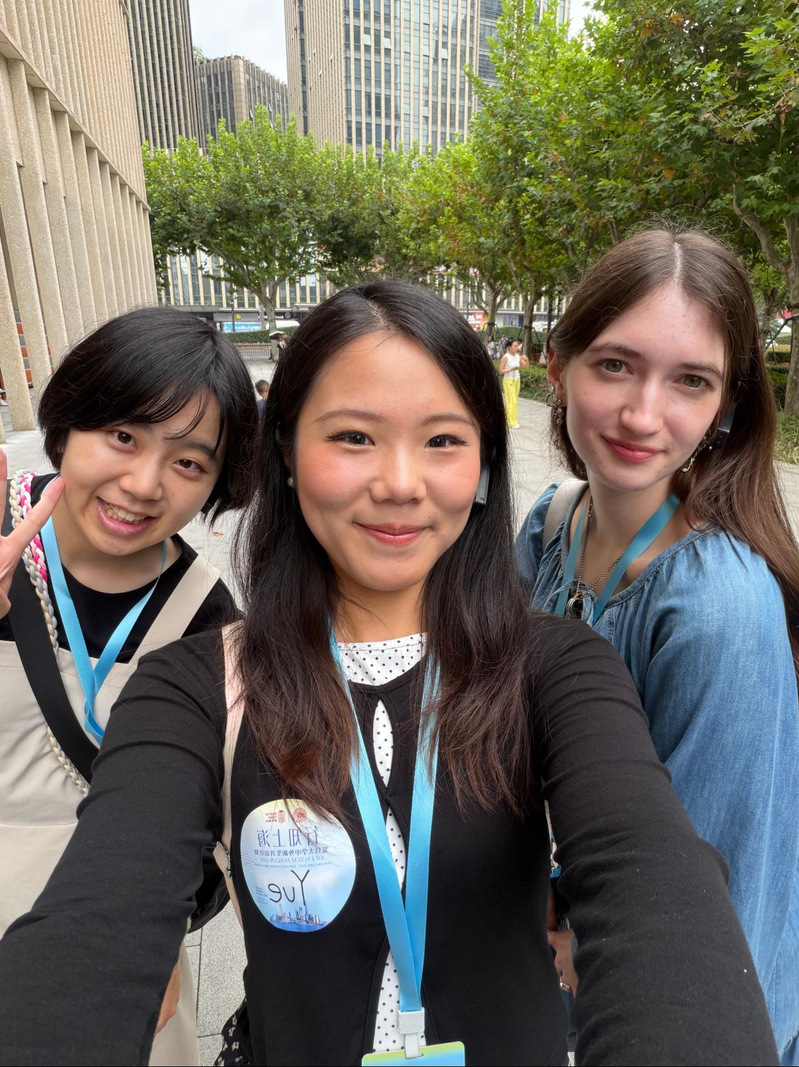
“I was surprised that we actually shared so many common hobbies in daily life,” said Ng Xuan Zin of Malaysia, comparing notes with the Chinese classmates beside her on games, shows, music — and finding more overlap than she had imagined.
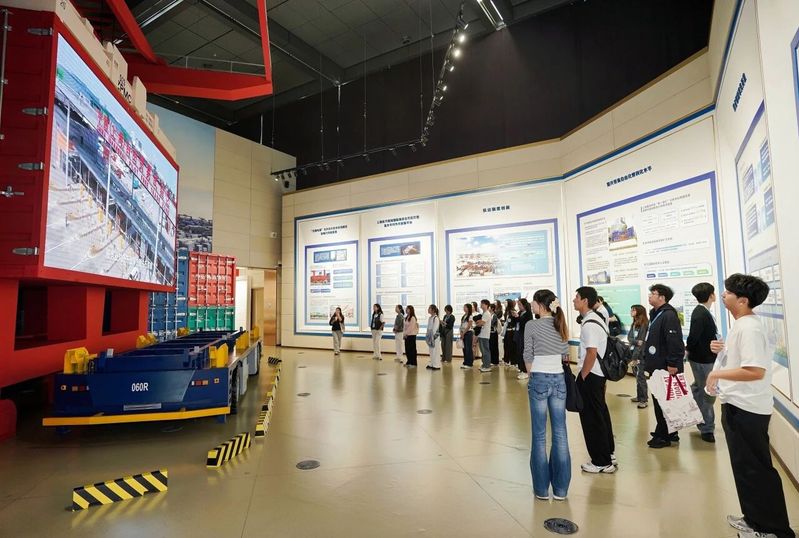
SUN Kaixiang, from the College of Smart Materials and Future Energy, called the walk along Pudong’s development arc “genuinely striking”. Seeing and talking and learning alongside his international friends, he said, made it all the more rewarding — “the whole trip was enjoyable.”
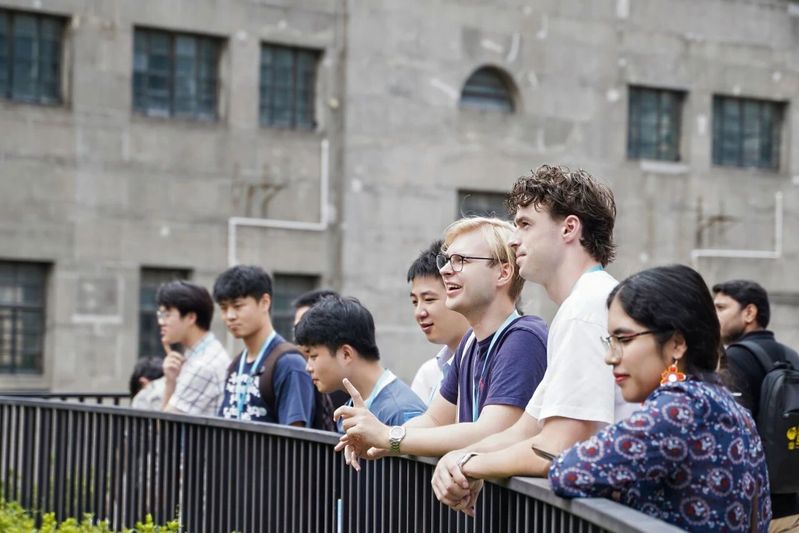
“With local students’ guidance, I saw a completely different side of Shanghai,” said Wahaj Uddeen Ahmad of Pakistan.
Still to come
Through the walking and the talking, the students learned to read Shanghai with their own feet.
Having covered Songjiang, Huangpu, Xuhui, Pudong and Qingpu, the group will head next to Fengxian and Yangpu this weekend.
In Fengxian, at the meeting point of the cosmetics industry and an eco-city, the students will see how industry sustains a city, and how green space moves into it.
In Yangpu, among factory buildings converted into parks, they will see how a “rust belt” of steel became a “belt of life”, and feel the effort it takes for an industrial district to turn around.
The city is vast.
The road is long.
Let's set off together.
(END)
Source: International Students Office, Department of Student Affairs
Writer: WANG Mengqi
Editor: WANG Mengqi